Categories
Spill Kits Ireland (Oil, Chemical & Universal)
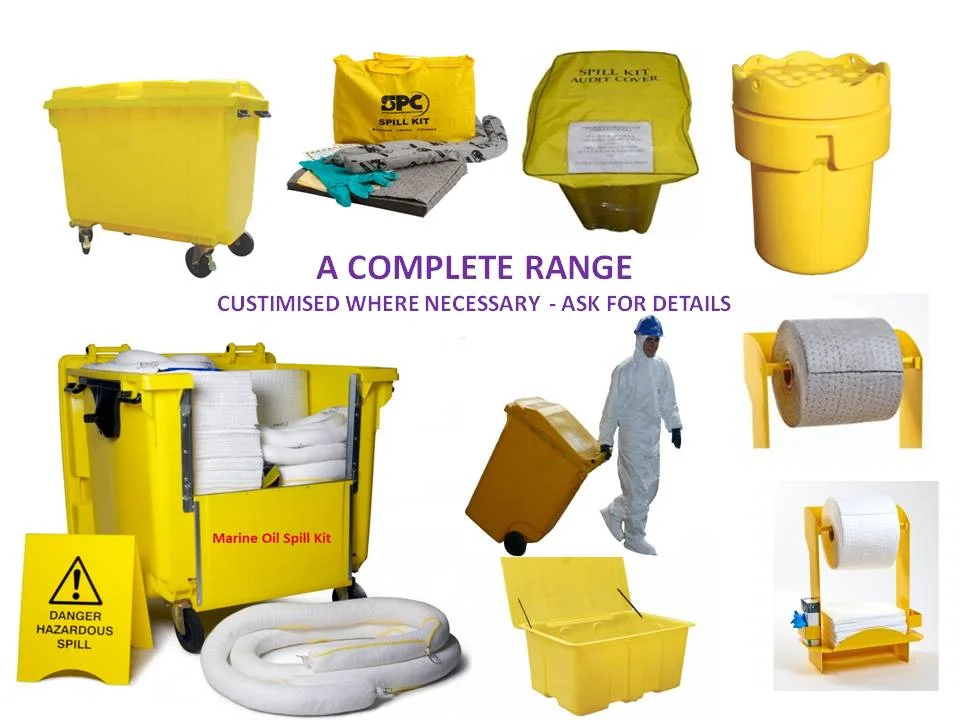
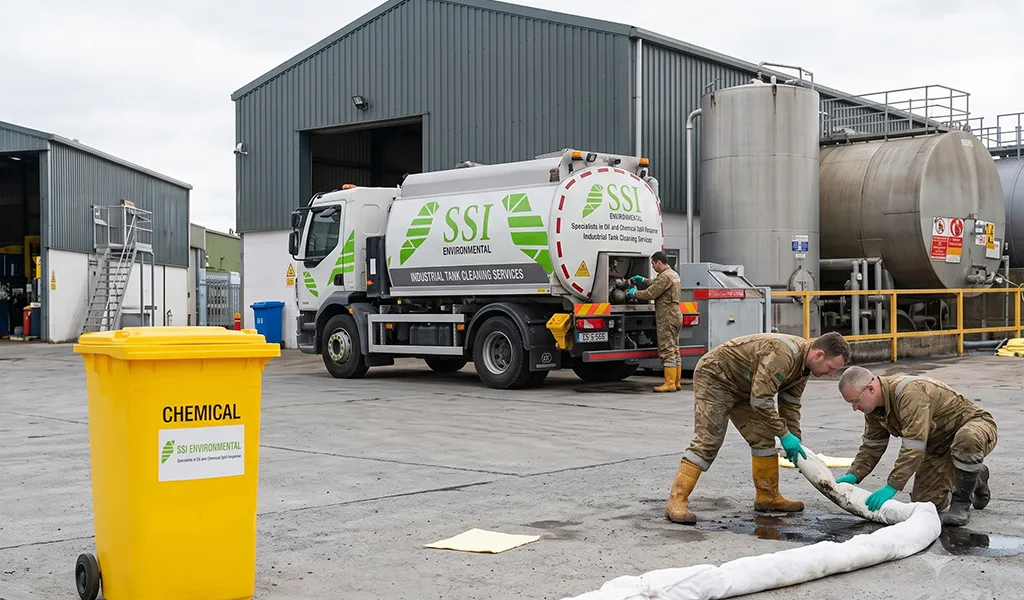
A spill kit is not a commodity purchase. The difference between a correctly matched kit and a generic box-seller choice can be the difference between a contained incident and an EPA prosecution. SSI Environmental has supplied and specified spill response equipment across Ireland for 25 years for motorway construction, windfarm installations, industrial facilities, and commercial properties. Our kits are matched to the hazard, not selected from a drop-down.
This page covers SSI's full range of spill kits for Ireland, including oil-only, universal and chemical spill kits, hazmat kits and marine kits, from 20-litre personal kits to 1,100-litre wheelie-bin IBC kits. It also covers refills, on-site training, and what Irish businesses are legally required to hold under EPA and IPPC licence conditions.
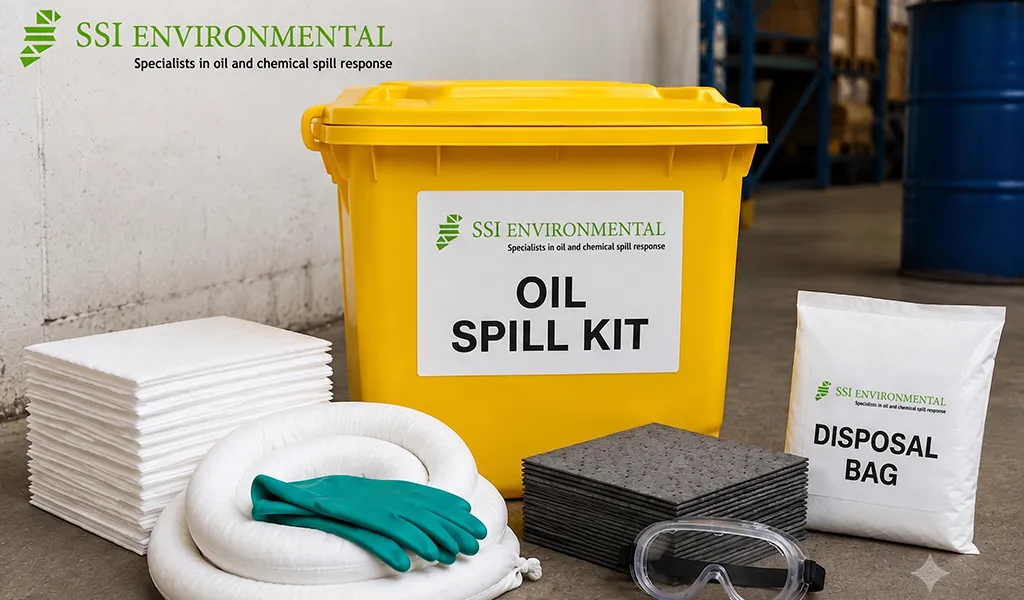
Spill Kit Types: Which Kit for Which Hazard?
| Kit Type | Absorbs | Best For | SSI Range |
|---|---|---|---|
| Oil-Only (Selective) | Hydrocarbons (oil, fuel, diesel) and repels water | Fuel storage, vehicle workshops, roads, outdoor drains near fuel | Mini kits (20L) to large-site kits (500L+). Oil-selective sorbents (white). |
| Chemical / Hazmat | Acids, bases, solvents, unknowns and chemical-resistant liquids | Laboratories, chemical stores, industrial processes, pharmacy | Includes compatible PPE, neutralising agents, hazmat waste bags. |
| Universal / Maintenance | Oils, fuels, water, coolants, non-hazardous liquids | General maintenance, machinery, vehicle leaks, indoor spills | Grey/black sorbents. Cost-effective for routine maintenance use. |
| Marine / Waterway | Oils and fuels on water surface | Marinas, river/canal sites, port operations, water-adjacent infrastructure | Oil-selective sorbents, containment booms, drain seals. |
Which Spill Kit Do I Need? Type Selector Guide
| Kit Type | Absorbs | Repels Water? | Best Application |
|---|---|---|---|
| Oil Spill Kit (white) | Oil, fuels, hydrocarbons only | Yes, repels water | Outdoor spills, car parks, marine, drainage |
| Chemical Spill Kit (yellow) | Acids, alkalis, solvents, most chemicals | No | Labs, pharma, chemical processing |
| Universal Spill Kit (grey) | Oils, fuels, water-based liquids, most chemicals | No | General industrial, warehousing, mixed use |
SSI Spill Kit Range: Sizes and Configurations
Personal and Vehicle Kits (20 to 50L)
Compact kits for individual vehicles, plant operators, and lone workers. Held on-vehicle or in site cabins. Contents: sorbent pads, mini-socks, waste bag and tie, gloves, and disposal instructions. Available in oil-only or universal configuration.
Site Response Kits (100 to 200L)
Suited to mid-size commercial and construction sites. Typically bucket or carry-case format. Contents: sorbent pads and rolls, sorbent socks (drain and bund containment), PPE, hazard tape, waste bags, and site-specific IBC sheets. Standard issue for IPPC-licensed sites and contractor welfare areas.
Large-Site and Wheeled Kits (240 to 500L)
Wheeled bins for rapid deployment across large sites. Suited to fuel storage areas, vehicle maintenance compounds, distribution facilities, and sites holding significant volumes of hazardous material. Contents: full sorbent roll, pad stack, socks, and PPE. Can be configured to oil-only, chemical, or universal specification.
IBC and Station Kits (500 to 1,100L)
For sites holding large volumes of liquids (IBC storage, bulk fuel tanks, chemical stores). High-capacity sorbent packs, compatible with bunded storage areas. Often specified as part of an EPA-compliant site emergency plan.
Spill Kit Size Guide: Volume Selector
| Kit Size | Capacity | Format | Deployment | Ideal For |
|---|---|---|---|---|
| 20/40L | 20 to 40 litres | Shoulder bag | Portable | Vehicles, small spills |
| Wall Mount | 40 to 80 litres | Wall bracket | Fixed location | Workshops, plant rooms |
| Vehicle Mount | 40L | Cabinet/strap | Mobile | Trucks, vans, plant fleet |
| 200L | 200 litres | Wheelie bin | Mobile bay | Manufacturing, large facilities |
| 1000L | 1,000 litres | Wheelie bin/IBC | Fixed station | IBC storage, bulk liquid areas |
SSI Spill Kits: Product Range Overview
| Product | Capacity | Type | Typical Application |
|---|---|---|---|
| Mini Vehicle Kit | 20L | Oil-Only / Universal | On-vehicle, lone worker, plant operator |
| Site Response Kit | 100L | Oil-Only / Universal / Chemical | Construction site welfare, small industrial |
| Medium Site Kit | 200L | Oil-Only / Universal / Chemical | Mid-size sites, fuel storage areas |
| Wheeled Bin Kit | 240 to 500L | Oil-Only / Universal | Large sites, rapid-deployment areas |
| IBC / Station Kit | 500 to 1,100L | Oil-Only / Chemical | Bulk storage, IBC yards, chemical stores |
| Marine Response Kit | Various | Oil-Only + Booms | Marinas, port, river/canal works |
Spill Kit Contents: Standard Inclusions
| Item | Quantity (example: 100L) | Function |
|---|---|---|
| Sorbent pads | 50 to 100 pads | Absorb pooled liquid; the primary sorbent item |
| Sorbent socks / booms | 4 to 8 socks | Contain the spill perimeter; protect drains and bund edges |
| Sorbent rolls | 1 roll | Cut-to-size sorbent for irregular shapes and channels |
| Disposal bags and ties | 4 to 6 bags | Hazardous-waste disposal of used sorbents (must go to licenced waste facility) |
| PPE (gloves, goggles) | 2 pairs each | First-responder protection |
| Hazard tape | 1 roll | Cordon off affected area while response is under way |
| Spill response instruction card | 1 | Step-by-step response protocol, laminated and waterproof |
| Chemical kits add: compatible PPE, neutralising agent | As specified | For acid/base/solvent spills. Standard gloves and goggles are not adequate for chemical response |
Loose Sorbents
Loose sorbents are used to both absorb and neutralise hazardous liquids so they can be easily disposed of with minimum risk to anyone involved. There are also multiple different types of loose sorbents all of which specialise in different substances. Browse SSI Environmental's loose sorbents category for product options.
The main ones are as followed:
- DiamixMineral based granules which are used to absorb oil, grease, water, solvents, chemicals and other liquids on solid surfaces. They also neutralises flammable, toxic and explosive substances so they can be disposed of safely.
- Quick Eco GelAbsorb slurry solids and creates a gel like substance which can be disposed of in any standard waste bin within minutes.
- Safety SorbentOften used as an anti-slip agent, it quickly absorbs liquids making them easy to clean up.
- Green StuffAbsorbs any chemical excluding cyanide solutions, decomposable peroxides, and concentrated nitric acid.
Materials
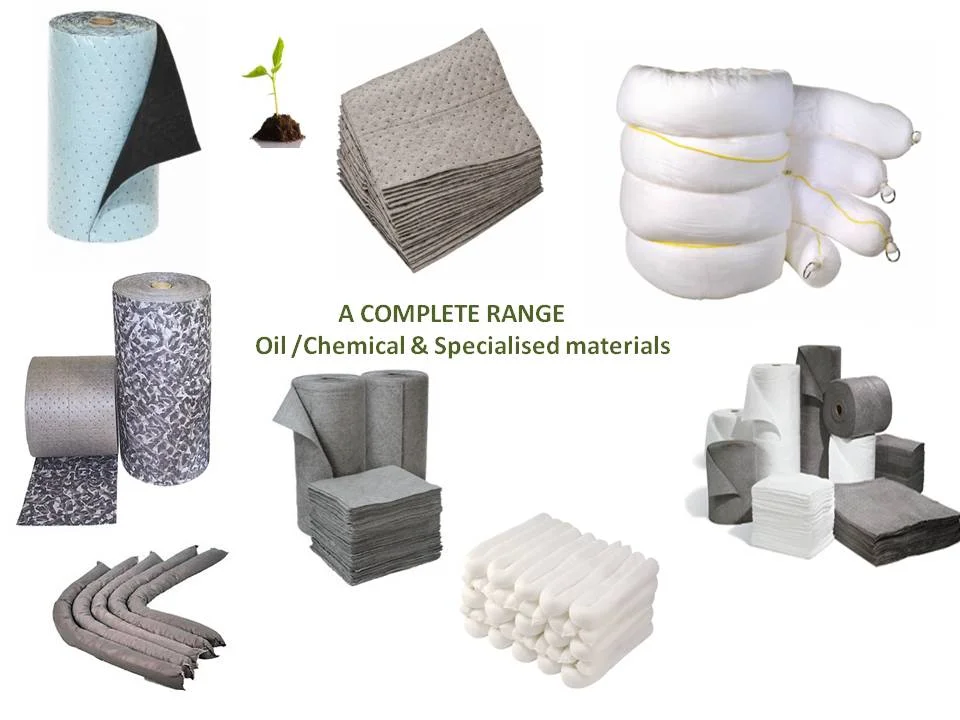
Other resources used to clear up hazardous substances are categorised as materials. These products achieve their purpose in multiple different ways. Browse SSI Environmental's materials category for pads, socks, booms and related spill response products.
The main ones are as followed:
- Micro-fibre: material used to absorb oil so it can easily be disposed of.
- Oil and chemical pads, socks and rolls: made to absorb large quantities of oil.
- Oil booms: a floating barrier used to contain oil spills which occur in water. They reduce the risk of pollution and collect the oil into one place facilitating the clean-up process.
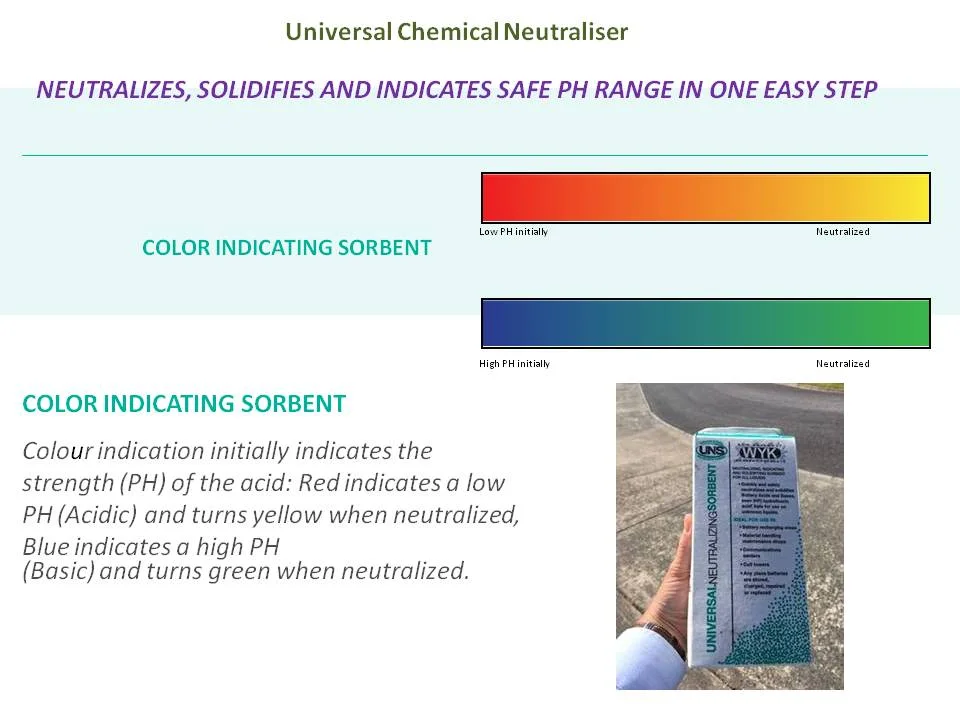
- Universal chemical neutraliser: neutralises acids so they are safe to clean up.
- Bio-tube: absorb oil and digest it, converting it to carbon dioxide and water.
There are different sizes and types of spill kits available depending on the substance spilled. For more information and to select the relevant spill kit for your needs see the links below.
SSI Environmental: 25 Years as Ireland's Spill-Response Specialist
- Site-specific kit design: we assess the liquids held on site, the drainage layout, and the scale of the risk, then specify the correct type, size, and quantity of kits.
- Spill-response training: on-site training for your team in correct response protocols including containment, absorption, disposal and incident reporting.
- EPA / IPPC compliance support: we help sites understand their legal duty to hold spill response and how kit specification feeds into site emergency plans.
- Refills and replenishment: used kits must be replenished; SSI provides refill packs matched to the original kit specification.
- Portfolio of complex sites: motorway construction, windfarm installations, river and infrastructure projects, large industrial facilities across Ireland.
Why Irish Workplaces Must Have Spill Kits
Under the Safety, Health and Welfare at Work Act 2005 and the REACH Regulation (EC 1907/2006), Irish employers have a legal duty to manage the storage and handling of hazardous substances safely. Spill kits are a required element of any workplace COSHH (Control of Substances Hazardous to Health) risk assessment where oils, fuels, solvents, or chemicals are used or stored.
Failure to have adequate spill response equipment on site in Ireland can result in:
- HSA (Health and Safety Authority) enforcement notices and fines for workplace safety violations
- EPA prosecution under the Water Pollution Acts for spills that reach drains or watercourses
- Worker injury due to slip hazards created by uncontained spills
- Costly environmental remediation and soil treatment where petroleum products contaminate ground
What Does Irish Law Require for Spill Kits?
Irish environmental law does not specify a minimum kit size by name, but several legal instruments require sites to hold adequate spill response capability:
- EPA Act 1992 (as amended): any discharge of a pollutant to a watercourse, groundwater, or sewer is an offence. Having no spill response is not a defence.
- IPPC Licence Conditions (EPA): IPPC-licensed facilities are required to maintain site emergency plans, which must include spill response provisions. Kit type and quantity must be appropriate to the substances held.
- IFI / Water Framework Directive: Inland Fisheries Ireland can prosecute for any discharge affecting fisheries, including accidental spills of fuel, oil, or chemical where no response was in place.
- Construction regulations: sites working near watercourses (under IFI and EPA Construction Guidelines) must have fuel and chemical spill response on-site at all times during works.
SSI's team can advise on the spill response obligation relevant to your site type and licence. We provide written kit specifications that can be included in site emergency plans and presented to inspectors.
Spill Kit Refills and Replenishment
A used spill kit is a non-functional spill kit. Once sorbents are used, they must be disposed of as hazardous waste (through a licenced waste contractor) and the kit replenished before the next incident.
SSI provides matched refill packs for all kits we supply, same sorbent type, same contents specification, same disposal bags. Refill delivery can be scheduled alongside annual training to ensure your site is always compliant.
Frequently Asked Questions: Spill Kits Ireland
What size spill kit do I need for my site?
The minimum rule of thumb is that your kit capacity should be able to absorb the maximum foreseeable single spill from any container on your site, not the total volume stored, but the largest single failure scenario. For a site with a 1,000-litre fuel tank, a 1,100-litre kit is appropriate. For sites with multiple smaller risks, SSI will specify multiple positioned kits rather than a single large one. Contact SSI for a site-specific assessment.Do I need a chemical spill kit or a universal kit?
If your site holds acids, bases, oxidisers, solvents, or any substance that could cause a chemical reaction or exposure risk on contact, a chemical kit with compatible PPE is required. Universal kits are not designed for chemical hazmat response and may not provide adequate protection. SSI can identify the correct specification for your substances.How often should a spill kit be replenished?
Immediately after any use. Additionally, an annual check of kit contents is good practice. Sorbents degrade over time and should be replaced if wet, compressed, or beyond their shelf life. SSI provides annual service packs.Can I buy just refills for my existing kit?
Yes. SSI supplies refill packs matched to any existing kit specification, including kits not originally purchased from SSI. Contact us with the kit capacity and sorbent type.
Request a Spill Kit Quotation or Site Assessment
SSI Environmental supplies and specifies spill kits for construction, industrial, and commercial sites across Ireland. Contact us for a site-specific kit recommendation, training enquiry, or refill quote.